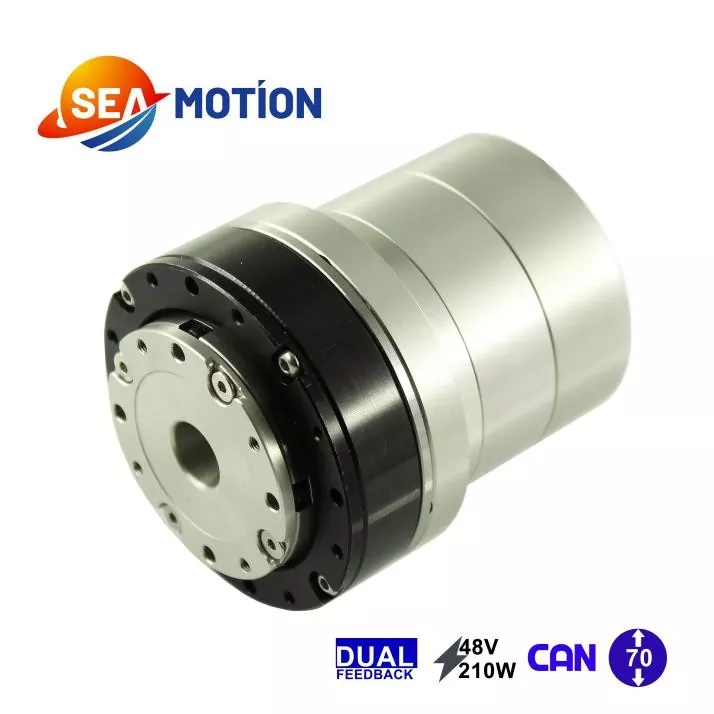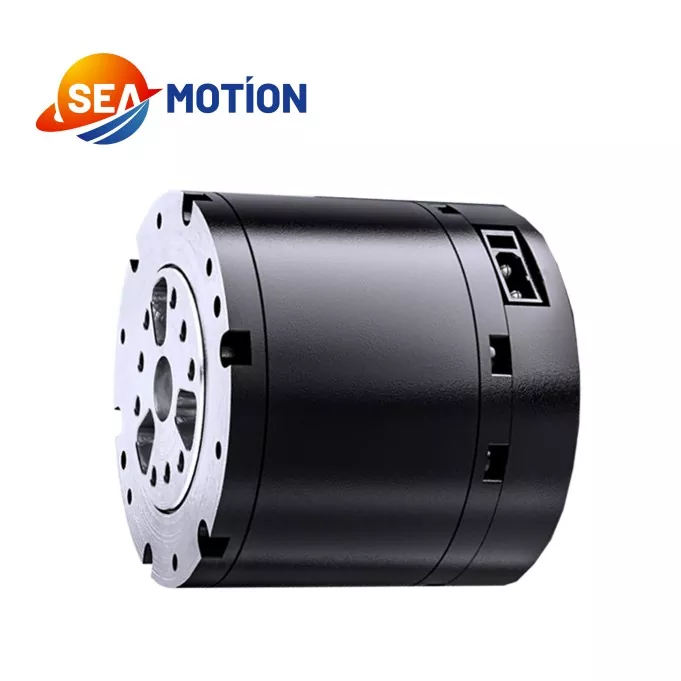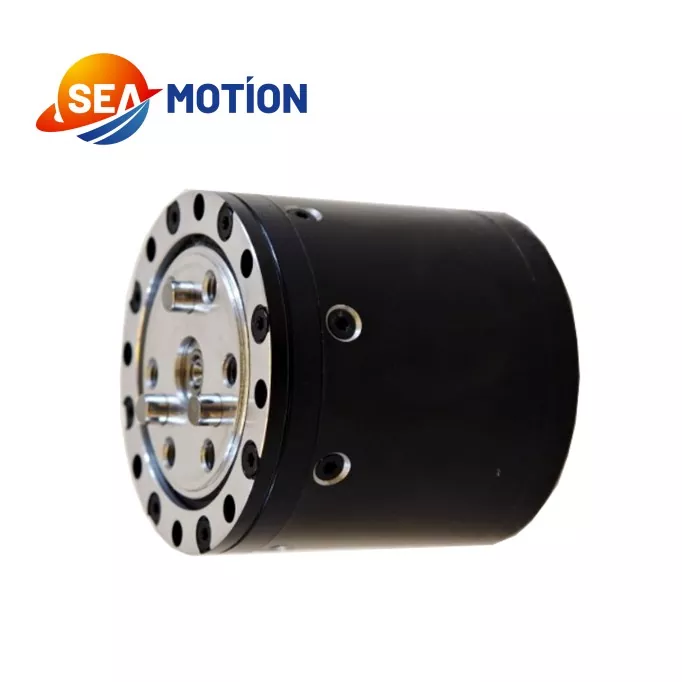
In the demanding world of marine engineering and offshore operations, the integrity of every connection point determines overall system reliability. A Joint Module serves as the critical interface between structural sections, piping networks, or dynamic systems, ensuring seamless load transfer, fluid containment, and long-term durability under extreme conditions. SEA MOTION has developed its Joint Module series to address the specific challenges faced by shipbuilders, offshore platform engineers, and marine infrastructure developers who require precision-engineered connection solutions that withstand corrosion, vibration, high pressure, and temperature fluctuation.
Beyond static strength, a SEA MOTION Joint Module provides operational benefits that reduce total cost of ownership and improve safety.
Fatigue resistance: The geometry of stress risers such as root radii and transition zones is designed using finite element analysis validated by full-scale resonance fatigue tests. For connectors on floating systems subject to wave-induced bending, we perform S-N curve assessments according to DNV-RP-C203 to guarantee a fatigue life exceeding the design field life.
Fire-safe capability: Where regulations demand fire resistance (e.g., API 6FB or ISO 10497), the Joint Module is equipped with secondary metal-to-metal sealing that maintains leakage rates below allowable limits during and after a defined fire exposure. Graphite-based gaskets with anti-stick coatings ensure post-fire disassembly is possible.
Vibration mitigation: Integrated damping elements or flexible metallic bellows can be incorporated into the Joint Module to decouple pump vibrations from connected piping. This reduces transmitted forces, protects adjacent equipment, and lowers the risk of fatigue cracking in welds.
Quick make-up design: Certain offshore operations demand connection times measured in minutes, not hours. The SEA MOTION Quick-Clamp Joint Module uses a segmented clamp and single-bolt closure that allows diver or ROV actuation with simple tooling, drastically cutting installation cost and vessel time.
Customized orientation: Multi-plane angle adjustments are possible through machined swivel features. Locking segments with indexed markings ensure reproducible alignment during reconnection after maintenance events.
How does SEA MOTION ensure that a Joint Module meets project-specific design codes?
Our engineering process begins with a detailed design basis document that captures all applicable codes, owner specifications, and interface conditions. The Joint Module is modelled in 3D CAD, and critical areas undergo finite element analysis to verify stress levels against allowable values defined by the chosen code. Material test coupons are extracted from sacrificial prolongations of forgings, and weld procedure qualifications are performed per ASME Section IX or equivalent. A final verifiable data book is assembled with certificates of conformity, NDE reports, and pressure test charts. This document package can be reviewed by third-party classification surveyors or customer inspectors prior to shipment.
What maintenance is required for a Joint Module over its service life?
Under normal operation, a standard Joint Module from SEA MOTION requires only periodic external inspection for coating damage, crevice corrosion, and seal integrity. If the module incorporates a replaceable seal, we recommend checking seal condition at intervals aligned with major vessel dry-dockings or plant turnarounds. Using the provided seal replacement kit and minimal tooling, a trained technician can renew the sealing element and return the module to service quickly. Our documentation includes torque values for bolted connections and recommended lubricants to facilitate future disassembly.
How does the Joint Module handle thermal expansion in long pipe runs?
When specified as an expansion joint type within the Joint Module family, the design incorporates a bellows element or sliding sleeve arrangement that absorbs axial and lateral thermal growth. The bellows are convolution-engineered using EJMA standards to ensure fatigue life under cyclic temperature conditions. External tie rods or limit stops can be included to react pressure thrust and protect the module from over-extension. SEA MOTION calculates the required stroke based on piping isometric data and provides an expansion capacity chart with each shipment.