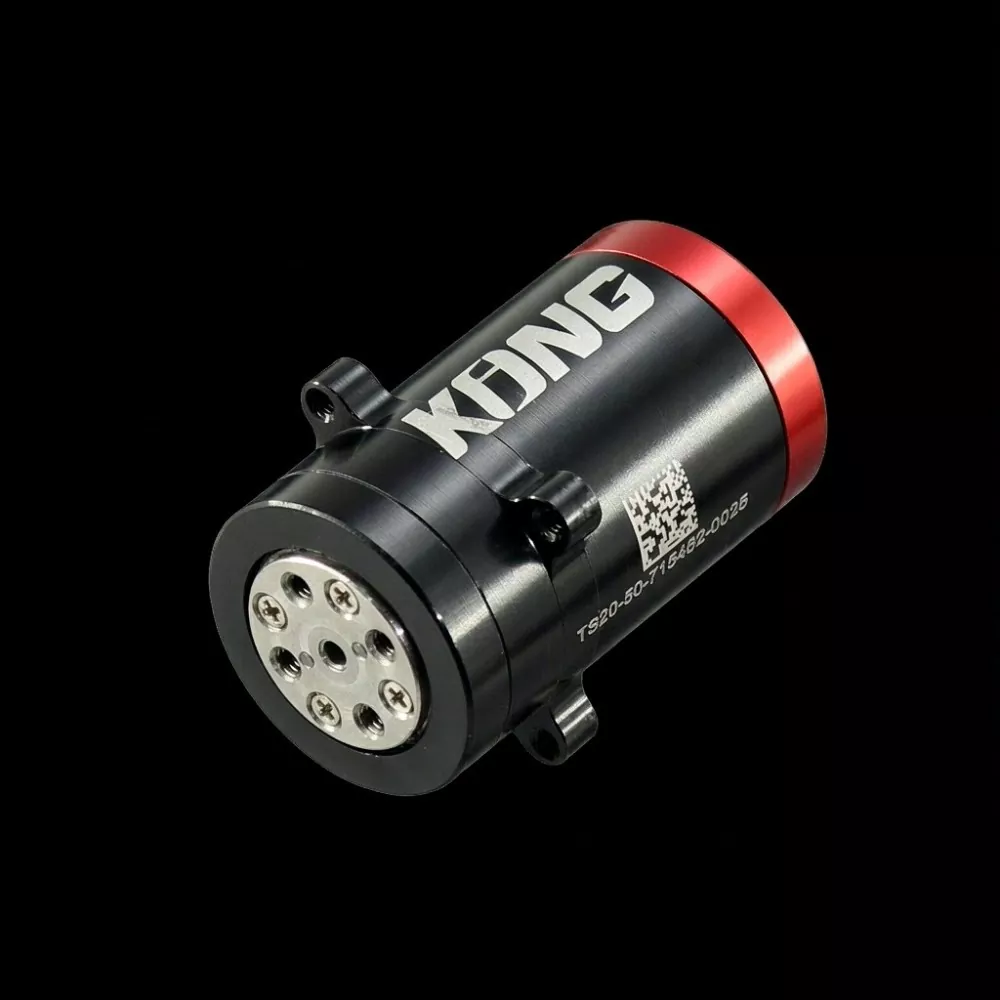
A dexterous hand joint module is designed against one hard limit: the finger it has to fit inside. At Ø20 mm and 35 g there is no room for a separate encoder board, no room for a brake, and no room for a gear stage that blurs the force signal the hand is supposed to feel. Everything has to be one part.
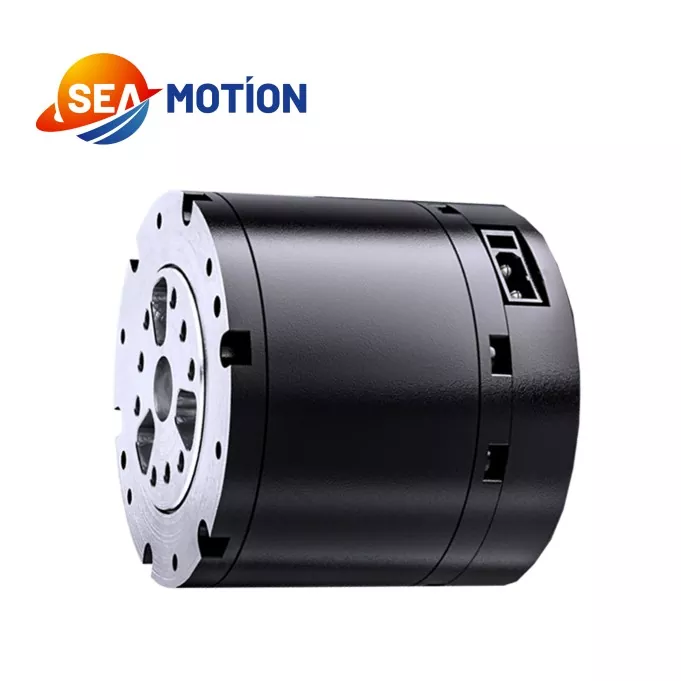
The TS20 is that one part. A permanent magnet synchronous motor, a 50:1 or 100:1 reducer, two independent 24-bit encoders and the field-oriented drive share a single Ø20 mm × 35 mm barrel. A Ø1.7 mm bore runs through the joint for a tendon or a signal lead. Both ratios are mechanically identical and mount on the same Ø24 mm flange, so a hand built around 50:1 can be re-proved at 100:1 without touching the mechanical design.
What makes it a tactile joint rather than a small servo is what the drive does with the feedback. Position, velocity and feedforward torque arrive over RS485 at 7.5 Mbps, and the firmware closes a full impedance loop on them: the host sets stiffness, damping and torque, and the joint resolves the rest. The output back-drives, so an unexpected contact appears as a torque reading instead of a stalled motor.
Backlash stays under 20 arc-seconds. Continuous torque is 0.7 N·m at 50:1 and 1.5 N·m at 100:1, with 2 N·m and 4 N·m available for 300 ms.
|
Item |
TS20-50 |
TS20-100 |
|
Gear ratio |
50:1 |
100:1 |
|
Rated torque |
0.7 N·m |
1.5 N·m |
|
Peak torque |
2 N·m @ 300 ms |
4 N·m @ 300 ms |
|
Peak torque duration |
Configurable |
Configurable |
|
Maximum no-load speed |
31.4 rad/s (≈300 rpm) |
15.7 rad/s (≈150 rpm) |
|
Backlash |
< 20 arc-second |
< 20 arc-second |
|
Encoder |
Dual 24-bit |
Dual 24-bit |
|
Outer diameter × length |
Ø20 mm × 35 mm |
Ø20 mm × 35 mm |
|
Hollow bore |
Ø1.7 mm |
Ø1.7 mm |
|
Weight |
35 g |
35 g |
|
Rated voltage |
24 VDC |
24 VDC |
|
Back-drivable |
Yes |
Yes |
|
Communication |
RS485 |
RS485 |
|
Common specification |
Value |
|
Baud rate |
7.5 Mbps, 8 data bits, no parity, 1 stop bit (8N1), little endian |
|
Protocol |
MIT impedance mode, v3.4, 14-byte frame, CRC16-CCITT |
|
Position range |
±128 revolutions (±804.2 rad) |
|
Torque range |
±16 N·m |
|
Velocity range |
±64 rad/s |
|
Position stiffness Kp |
0 to 64 |
|
Velocity damping Kd |
0 to 2 N·m/(rad/s) |
|
Control commands |
Default (stop), MIT closed loop, ClearFault, Reset |
|
Device ID |
0 to 15, set over the bus |
|
Watchdog |
1 s host timeout, then Default mode |
|
Protection |
Over-current, over-voltage, under-voltage, transient over-voltage, FET over-temperature, motor over-temperature, encoder error |
|
Mounting, fixed side |
Ø24 mm flange PD, M2 screws |
|
Mounting, load side |
Ø9 mm flange PD, coaxial with output |
|
Cable exit |
Side exit |
|
Housing |
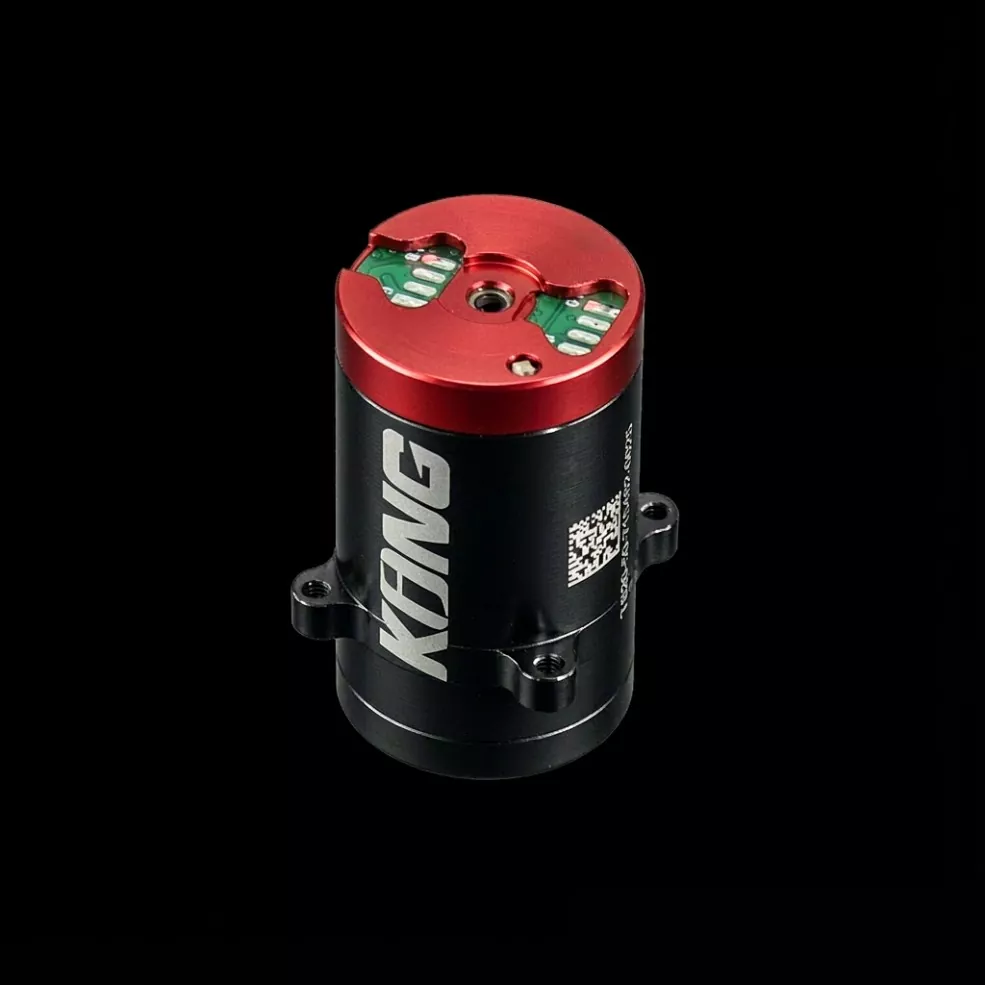
Black anodised aluminium barrel, red anodised end cap |
TS20 - 50 - 715462 - 0025
|
Segment |
Meaning |
This unit |
|
TS20 |
Series, 20 = Ø20 mm body diameter |
TS20 |
|
50 |
Gear ratio |
50:1 (100 for the TS20-100) |
|
715462 |
Factory configuration code |
715462 |
|
0025 |
Unit serial number |
0025 |
The two ratio variants carry the same model stem and differ only in the ratio segment. Quote the full code on the label when reordering, so the build matches the unit already in your hand.
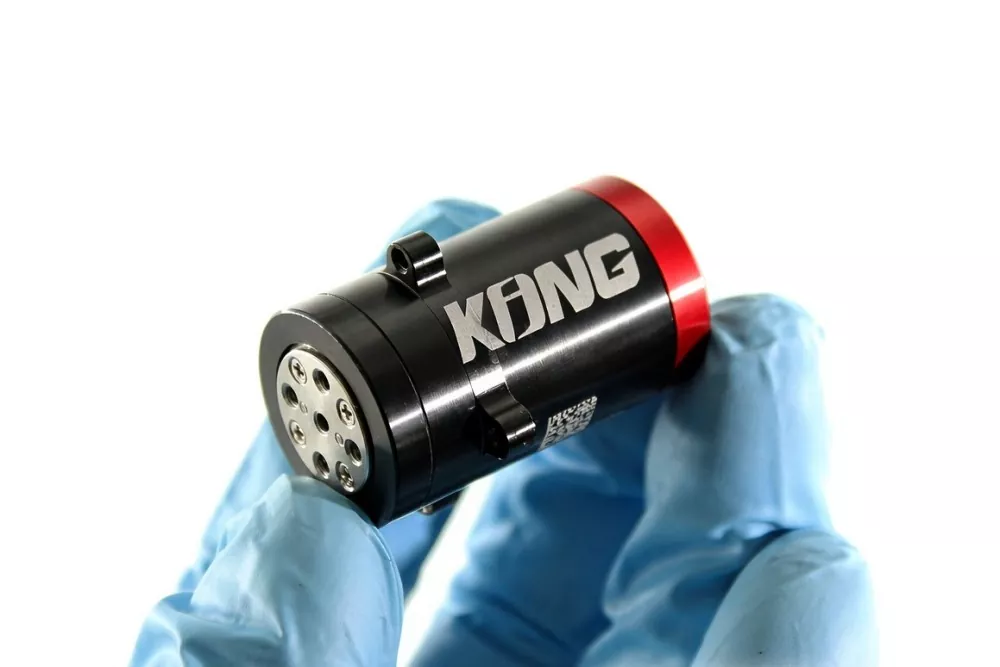
● Ø20 mm × 35 mm and 35 g, the envelope where a dexterous hand joint module has to live
● 50:1 and 100:1 share one housing and one Ø24 mm flange, interchangeable without redesign
● 0.7 N·m and 1.5 N·m continuous, 2 N·m and 4 N·m peak for a configurable 300 ms window
● Dual 24-bit encoders and under 20 arc-seconds of backlash for fine force resolution
● Back-drivable output, so the joint can be pushed and reports what it feels
● Full impedance loop on board: host sets Kp, Kd and feedforward torque
● 7.5 Mbps RS485 link, roughly sixty times a standard 115200 baud bus
● Ø1.7 mm hollow bore for tendon or lead routing through the axis
● Seven fault classes with defined clear behaviour, watchdog stop within 1 s
● Single 24 VDC supply, four-wire connection, no external drive board
A dexterous hand joint module carries the whole sensing problem of a hand. The TS20 is specified for dexterous hand and multi-finger gripper joints, small humanoid and desktop robot arms, precision automation end effectors, medical robot positioning stages where a compact servo has to hold position under load, and aerospace micro servo assemblies where mass budget decides the design.
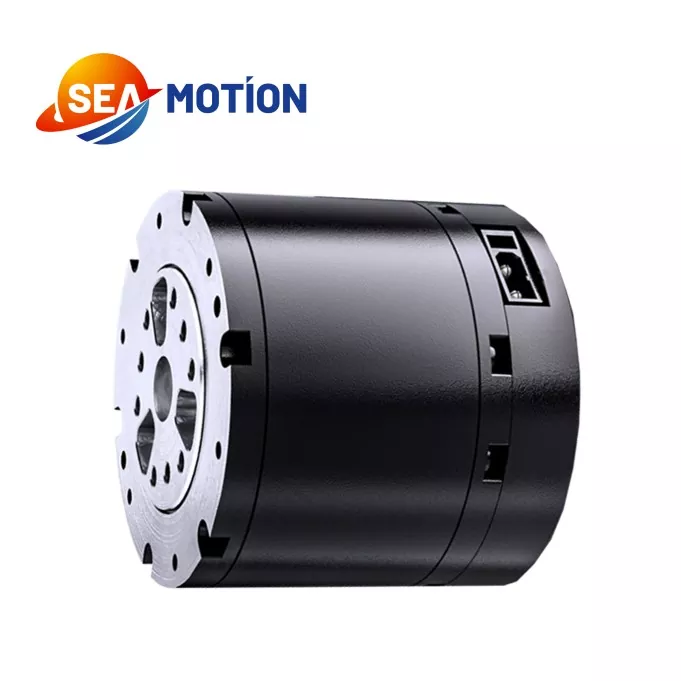
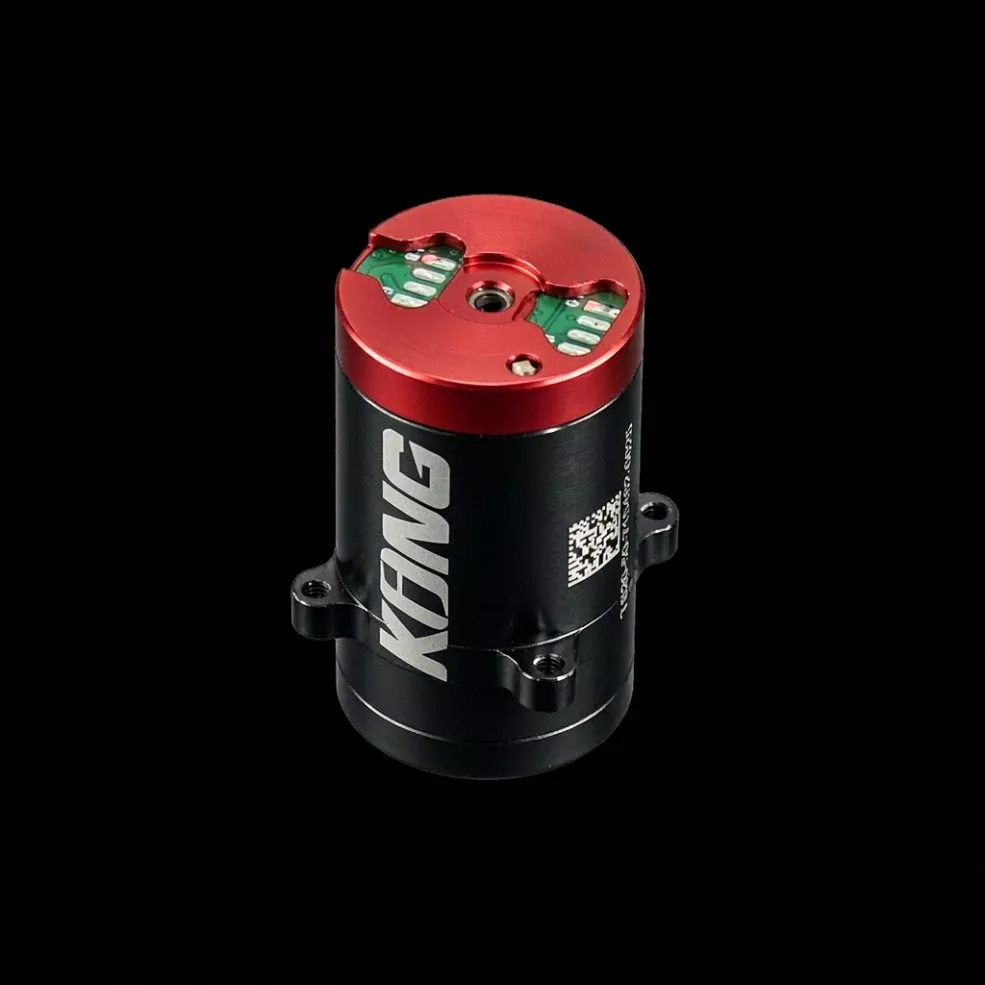
The barrel is one piece of anodised aluminium with the two mounting ears machined into it rather than bolted on. At this wall thickness a screw-on ear would be the first thing to crack, and a cracked ear takes the whole joint out of a hand build.
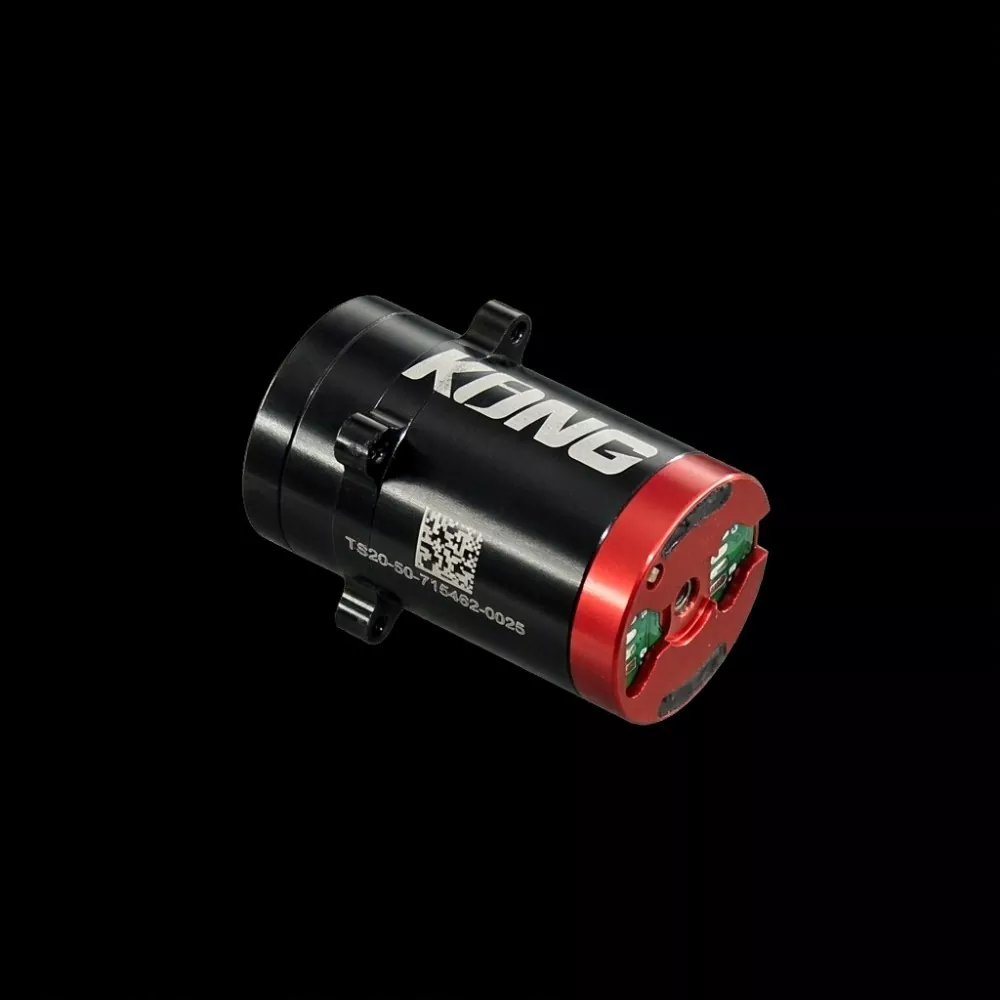
At the tail, the drive board carries four solder pads reached through windows in the red end cap. That choice removes a connector body from the axial length, which matters when 35 mm is the entire joint. Wires are soldered straight to the board and strain-relieved against the cap.
Two encoders run at opposite ends of the gear train. Reading the output side directly means backlash and compliance inside the reducer stop being invisible error, which is what allows the impedance loop to stay stable at high stiffness.
Backlash under 20 arc-seconds at Ø20 mm is a gear train property, not a firmware correction. It comes from preload and from a gear set matched to the motor, and it is the number that separates a joint module from a hobby servo.
Every unit is laser marked with its serial and a QR code on the barrel, so a joint pulled from a hand assembly can be traced back to its build record.
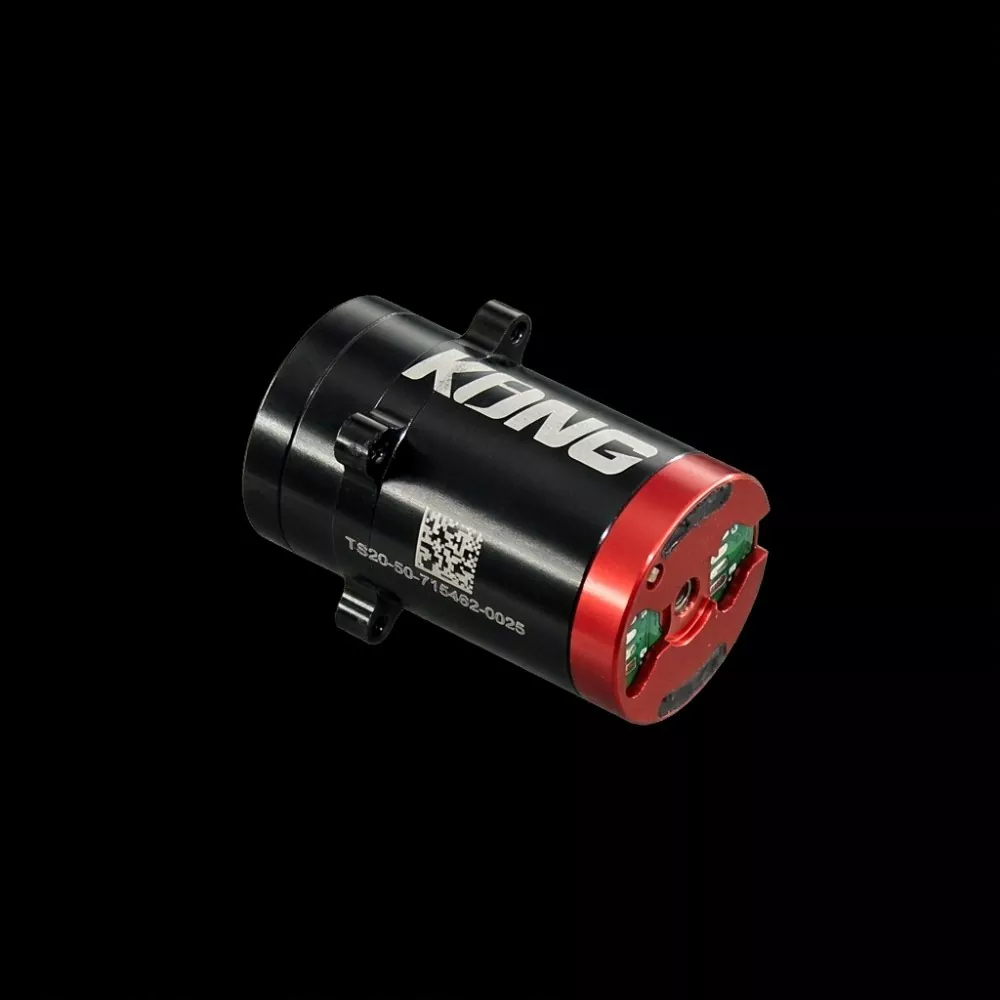
Four wires leave the joint: VCC, GND, 485_N and 485_P. Power and the differential pair share the same lead, so a finger needs one cable only.
|
Pin |
Signal |
Function |
|
1 |
VCC |
24 VDC supply positive |
|
2 |
GND |
Supply negative, common ground |
|
3 |
485_N |
RS485 differential negative |
|
4 |
485_P |
RS485 differential positive |
Each command frame is 14 bytes: device ID and command in byte 0, then position stiffness Kp, target position, feedforward torque, target velocity and damping Kd, closed by CRC16-CCITT. The response returns FET temperature, motor temperature, the fault byte, and measured position, torque and velocity in the same frame length, so a host can run a full force loop on one request-response pair.
The control law is the reason the joint feels like a hand part and not a gearmotor:
τ = Kp (θdes − θ) + Kd (ωdes − ω) + τdes
Set Kp to zero and the joint is a pure torque source, which is what a force-controlled finger needs. Raise Kp and it becomes a stiff position joint. Everything between the two is available per frame, so grasp force can be scheduled rather than switched.
Faults are reported as bits with defined clear behaviour: over-current, over-voltage, under-voltage, FET over-temperature, motor over-temperature and encoder error stop the joint and need ClearFault or Reset, while transient over-voltage clears itself after 100 ms so it can drive a brake resistor without latching.
1. Locate the fixed side on the Ø24 mm flange pitch diameter and fasten with M2 screws. Do not use the barrel as a locating surface.
2. Couple the load on the Ø9 mm flange pitch diameter and check coaxiality before tightening. Radial offset on a 35 g joint goes straight into the bearing and the backlash figure.
3. Respect the side cable exit. Leave a bend radius at the cap, because the solder pads take no pull.
4. Terminate the RS485 pair with 120 Ω at the far end when several joints share a bus, and keep the pair away from motor power leads.
5. Assign device IDs 0 to 15 over the bus before wiring a multi-finger hand, so each joint answers only its own frames.
6. Enable the watchdog bit. If the host stops talking, the joint returns to Default mode and stops within 1 s instead of holding the last command.
Each joint is packed in an anti-static bag, cushioned in pearl foam and boxed individually, so the solder pads and the output flange are not loaded in transit. Bulk orders ship in double-wall cartons with compartmented separators sized to the barrel.
Samples go by express, urgent volume by air, and full orders by sea. The serial on the label is quoted on the packing list so a shipment can be reconciled against the build record.
A: NO, SEA MOTION is the agent of KINGKONG of East China and overseas market.
A: 50:1 for high speed and medium torque, 100:1 for high torque and fine positioning. The two are structurally identical and interchangeable, so the usual approach is to prototype the hand on one ratio and confirm on the other.
A: No. The drive sits inside the joint and takes 24 VDC plus RS485. Four wires cover power, ground and the differential pair.
A: Yes. Leads can be terminated to length, and a connector can be added at the cap for volume builds where hand assembly prefers not to solder.
A: Price depends on ratio, lead termination and order quantity. Send the ratio and the annual volume and we will return a price.
A: [5 pcs]
A: [4 weeks]
A: [12 month]
SEA MOTION KINGKONG builds dexterous hand joint modules in Beijing for robot hands and small joints, not general-purpose servos resized for the market. The Ø20 mm barrel, the dual encoder arrangement and the impedance firmware were developed together against finger-joint duty cycles, where the joint has to fit inside the moving part, hold position at zero speed and still report force accurately enough to close a grasp. The line covers micro joint modules, magnetic and photoelectric encoders and matched servo drives, so one supplier can carry the mechanical and the feedback side of the same hand.
Send the hand envelope, the ratio you are planning and the bus you already use. We will come back with the model code, the flange stack-up and a sample schedule.
Address
403 4F Office Building Robot Industry Park No.232 Yuanfeng Road National High Tech Park Kunshan Suzhou Jiangsu China
Tel