
As industrial automation demands higher accuracy, faster cycle times, and more reliable motion control, SEA MOTION provides advanced linear drive motor solutions designed for demanding precision applications. By converting electrical energy directly into linear movement, these motors eliminate the need for conventional mechanical transmission components in the drive path, helping equipment manufacturers improve positioning performance, reduce backlash-related errors, and optimize production efficiency.
Article Summary: A linear drive motor delivers direct, controlled linear motion for precision manufacturing and automated equipment. This guide explains how the technology works, compares iron-core and ironless designs, reviews important performance parameters, and explores applications in semiconductor manufacturing, CNC machining, new energy production, and industrial inspection. It also outlines practical selection criteria to help engineers and purchasing teams identify a suitable solution.
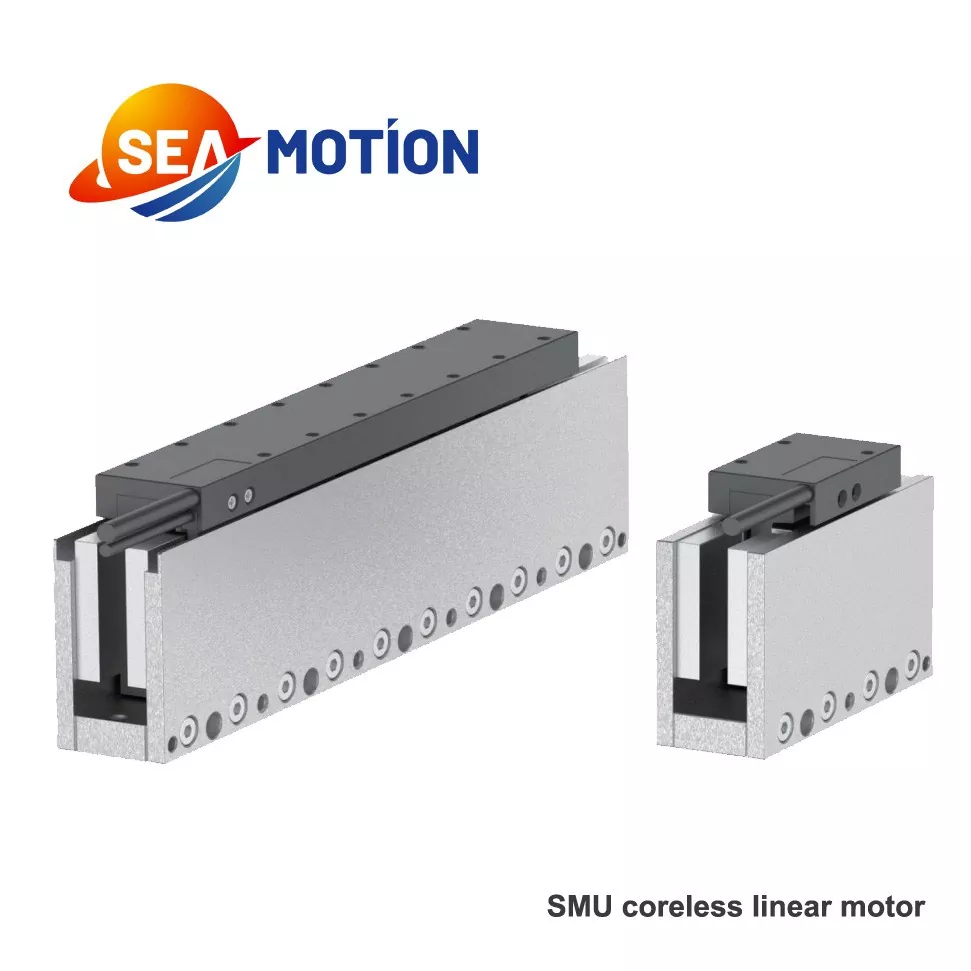
A linear drive motor is an electromagnetic actuator that generates straight-line movement directly, rather than producing rotary motion that must be converted through a ball screw, belt, or gear mechanism. It is widely used in applications where precise positioning, rapid acceleration, smooth movement, and repeatable operation are essential.
In a typical direct-drive arrangement, an electromagnetic moving component interacts with a permanent-magnet track to generate thrust. When integrated with a suitable servo drive, position feedback device, and linear guide, the motor becomes part of a controlled motion axis.
Unlike conventional screw-driven systems, a direct-drive design removes mechanical transmission backlash from the drive path. This makes it particularly attractive for applications requiring frequent direction changes, high-speed positioning, and consistent motion accuracy.
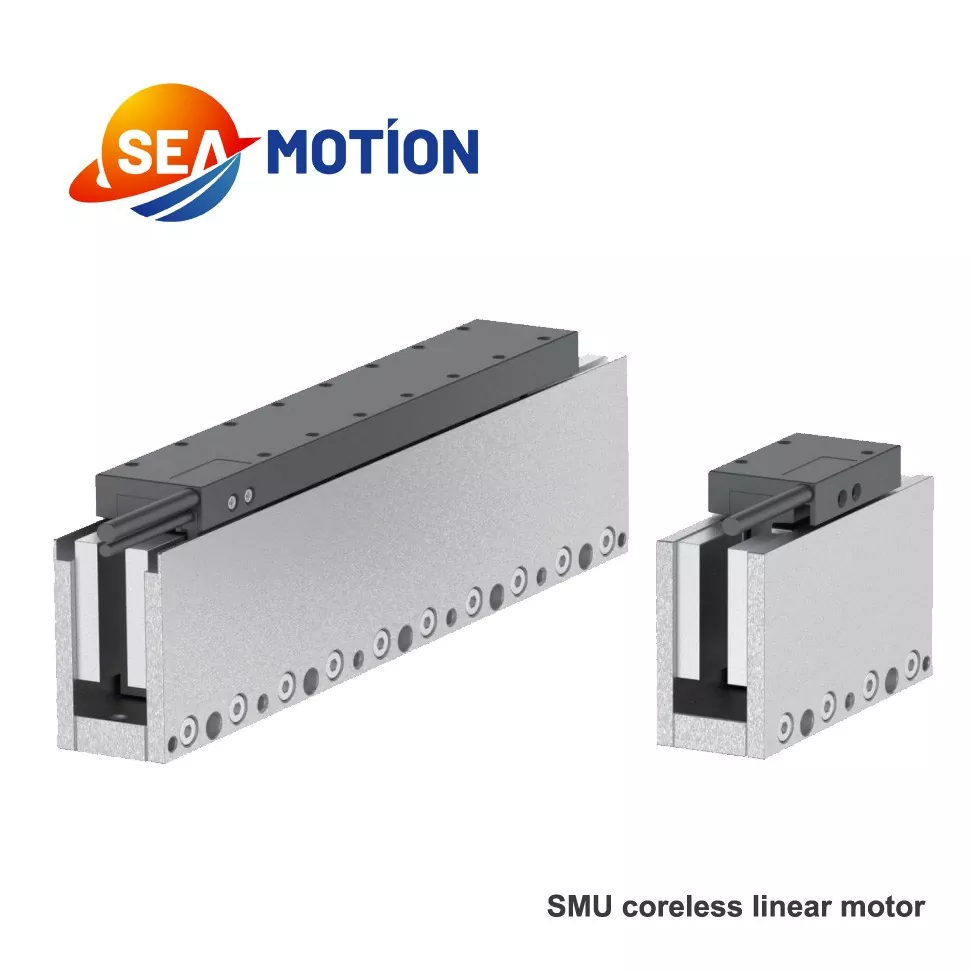
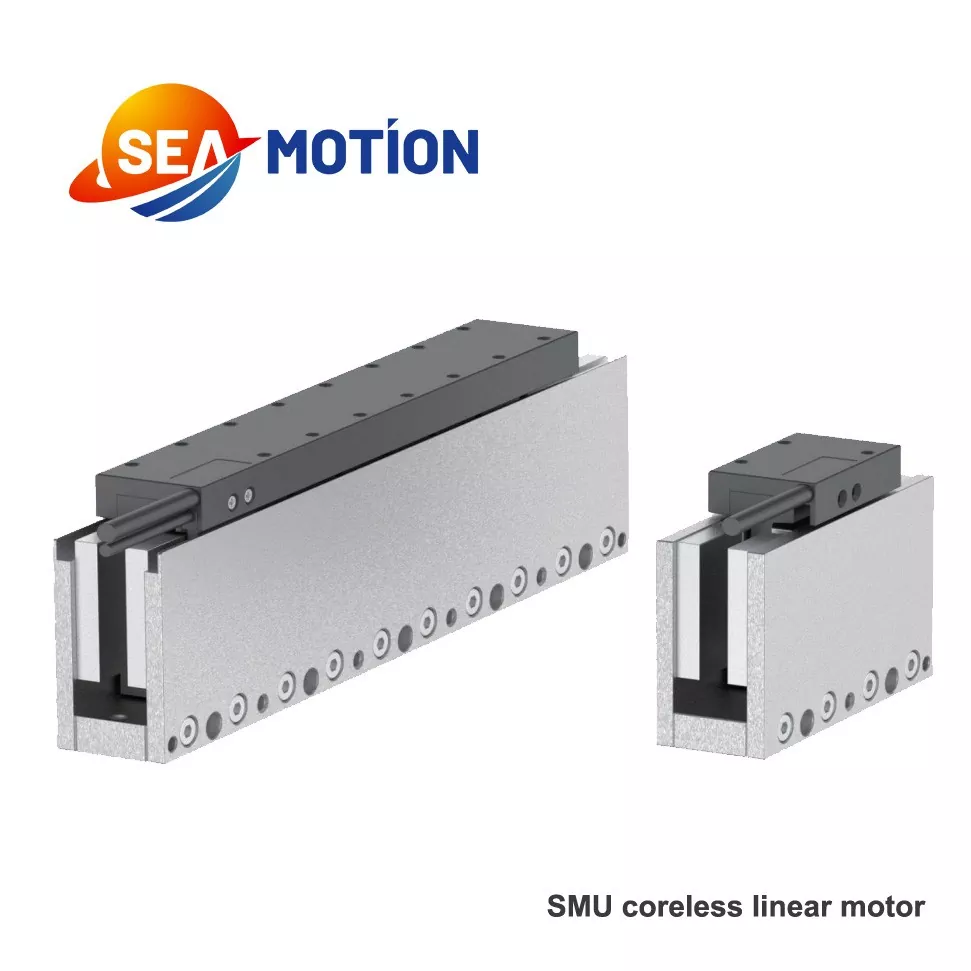
SEA MOTION offers several linear motor configurations, including the SMJ flat magnetic iron-core series, SMUC intermediate magnetic iron-core series, SMU-H bilateral magnetic iron-core series, and SMU bilateral magnetic ironless series. Semi-closed SMJE and fully enclosed SMJD configurations are also available for application-specific requirements.
For more product information, visit the SEA MOTION linear drive motor product page.
The working principle of a linear drive motor is based on electromagnetic force. A compatible servo drive supplies controlled electrical current to the motor windings. The resulting magnetic field interacts with the permanent magnets along the motor track, generating linear thrust.
The controller adjusts current and motion commands according to the required position, speed, and acceleration. When a feedback device is incorporated, the control system can continuously compare actual movement with the target position and correct deviations.
A typical linear motion system includes the following components:
Because the motor generates linear thrust directly, it avoids the pitch errors, backlash, and transmission compliance that can affect screw- or belt-driven mechanisms. However, overall accuracy still depends on the encoder, servo tuning, guide quality, thermal stability, mounting precision, and machine structure.
Direct drive eliminates mechanical transmission backlash, making it easier to achieve consistent positioning and repeatability. This is valuable for precision cutting, electronic component placement, optical inspection, and automated assembly.
Linear motors can respond rapidly to changes in motion commands. In suitable configurations, this enables shorter transfer times, faster reciprocating movements, and improved throughput in high-cycle production equipment.
Removing the screw, belt, or gear transmission from the drive path reduces wear associated with those components. Maintenance requirements may therefore decrease, although guides, bearings, cooling equipment, and other system components still require appropriate servicing.
With suitable feedback and control tuning, a linear drive motor can provide stable movement across repeated operating cycles. This helps manufacturers maintain consistent processing conditions during precision inspection, bonding, dispensing, and machining.
Linear motors can support short-stroke positioning, long-travel movement, and synchronized multi-axis arrangements. Their suitability depends on the required thrust, track length, installation space, thermal design, and control architecture.
Different linear motor structures address different engineering priorities. The choice between iron-core and ironless designs should be based on the application's thrust requirements, force ripple tolerance, magnetic attraction, thermal behavior, and available installation space.
| Motor Design | Main Characteristics | Potential Applications | Selection Consideration |
|---|---|---|---|
| Flat magnetic iron-core | Compact magnetic structure and high thrust potential | CNC equipment and industrial automation | Evaluate force ripple and magnetic attraction |
| Intermediate magnetic iron-core | Alternative magnetic and mechanical arrangement | Specialized precision motion axes | Check mounting geometry and required thrust |
| Bilateral magnetic iron-core | Double-sided magnetic arrangement | High-dynamic industrial positioning | Assess structural integration and magnetic forces |
| Bilateral magnetic ironless | No iron core in the moving coil assembly | Precision inspection, electronic assembly, and low-force-ripple applications | Confirm continuous thrust and thermal limits |
SEA MOTION's SMU series provides an ironless option for applications where smooth motion and low magnetic attraction are important design considerations. The SMJ, SMUC, and SMU-H families provide iron-core alternatives for other combinations of thrust, size, and integration requirements.
Design characteristics vary by model. Engineers should review the relevant force-speed curves, dimensional drawings, and operating limits before finalizing a motor selection.
Choosing a linear drive motor requires more than comparing maximum speed or peak thrust. The motor must satisfy both the short-duration demands of acceleration and the continuous demands of the production cycle.
The following table summarizes representative specifications published for the SEA MOTION SMU21 ironless linear drive motor series.
| Parameter | SMU21-78 | SMU21-138 | SMU21-198 | SMU21-258 |
|---|---|---|---|---|
| Peak thrust | 105 N | 210 N | 315 N | 420 N |
| Continuous thrust | 30 N | 60 N | 90 N | 120 N |
| Coil length | 78 mm | 138 mm | 198 mm | 258 mm |
| Maximum continuous power | 49 W | 100 W | 145 W | 195 W |
| Magnetic pitch | 30 mm | 30 mm | 30 mm | 30 mm |
Important: The table summarizes model-level values from the published series specification. Maximum speed, current, winding configuration, and other electrical characteristics vary by model and winding option. Consult the manufacturer's complete datasheet before making engineering decisions.
When reviewing a specification sheet, prioritize these parameters:
For the most reliable comparison, evaluate the expected load, acceleration profile, duty cycle, and thermal conditions together rather than choosing a motor based on a single headline specification.
The combination of direct drive, dynamic response, and controllable positioning makes linear drive motors suitable for a broad range of industrial applications.
Wafer handling, precision alignment, inspection stages, and display-panel processing can require repeatable movement with minimal positioning error. Linear motors help equipment designers build responsive motion axes for these demanding processes.
High-speed machining centers, laser cutting systems, and precision engraving equipment can benefit from fast acceleration and the removal of screw-drive backlash. Machine rigidity, cutting forces, and thermal control remain important to final machining accuracy.
Battery electrode handling, stacking, component alignment, and photovoltaic cell inspection often involve repetitive high-speed movements. A properly sized motor can help coordinate these operations while maintaining consistent positioning.
Electronics manufacturing uses precision motion for component placement, dispensing, bonding, sorting, and visual inspection. Direct-drive axes can support short cycle times and controlled movement across repeated operations.
Imaging platforms, laboratory instruments, and scientific measurement equipment may require smooth, controlled movement. The appropriate motor and feedback system must be selected according to noise, accuracy, cleanliness, safety, and duty-cycle requirements.
SEA MOTION also develops equipment based on linear motor technology, including high-precision laser cutting and visual recognition and inspection systems. Explore its linear motor solutions to understand the wider product range.
A structured selection process helps reduce engineering changes and avoid undersized or unnecessarily expensive motion components. Before requesting a quotation, define the operating conditions as clearly as possible.
It is also useful to ask the supplier for dimensional drawings, force-speed curves, electrical specifications, recommended drive compatibility, and technical support during commissioning.
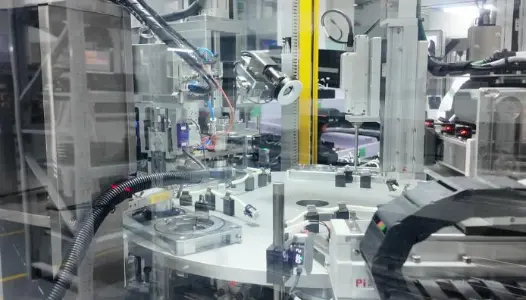
For purchasing teams, additional considerations include production consistency, inspection procedures, delivery capacity, spare parts availability, and after-sales support. SEA MOTION reports that its upgraded clean workshop entered operation in early 2026, increasing production capacity and supporting improved product consistency and delivery efficiency.
A conventional rotary servo motor produces rotational movement that may require a ball screw, belt, or gearbox to create linear displacement. A linear drive motor generates straight-line thrust directly, eliminating the need for those mechanical transmission components in the drive path.
Yes. Linear motors can provide rapid acceleration and high-speed positioning when the motor, servo drive, feedback system, and mechanical structure are correctly matched. The achievable performance depends on the specific model and application conditions.
Iron-core motors use an iron core in the electromagnetic assembly and can provide high thrust in a compact design. Ironless motors eliminate the iron core in the moving coil assembly, which can reduce cogging and magnetic attraction. The best choice depends on the application's thrust, smoothness, and integration requirements.
The direct-drive mechanism eliminates wear associated with conventional screw or belt transmissions. However, the complete motion system may still require guide lubrication, cable inspection, cleaning, cooling-system maintenance, and periodic performance checks.
Calculate the force required throughout the operating cycle, including acceleration, friction, external loads, and process forces. Then evaluate the duty cycle and thermal conditions. The selected motor must satisfy continuous requirements as well as peak-force demands.
SEA MOTION offers SMJ, SMUC, SMU-H, and SMU linear motor series, along with semi-closed SMJE and fully enclosed SMJD configurations. Availability and suitability should be confirmed with the manufacturer according to the required travel, force, installation conditions, and application.
Provide the required thrust, moving mass, stroke length, maximum speed, acceleration, operating cycle, installation dimensions, power supply, feedback requirements, and intended application. Sharing relevant drawings or existing equipment specifications can also help the supplier recommend a suitable configuration.
A linear drive motor is a valuable option for manufacturers seeking precise positioning, rapid dynamic response, and reduced dependence on mechanical transmission components. Its advantages can be particularly significant in semiconductor equipment, CNC machining, battery production, electronic assembly, and automated inspection. Successful implementation, however, requires careful evaluation of thrust, speed, thermal limits, feedback, and mechanical integration.
SEA MOTION provides multiple linear motor configurations and technical support for industrial motion control applications. If you are evaluating a new machine design or upgrading an existing motion axis, visit the linear drive motor product page to review the available options. Contact SEA MOTION to discuss your operating requirements, compare suitable models, and obtain product specifications and a quotation. For a tailored recommendation and assistance with your next automation project, contact us today.