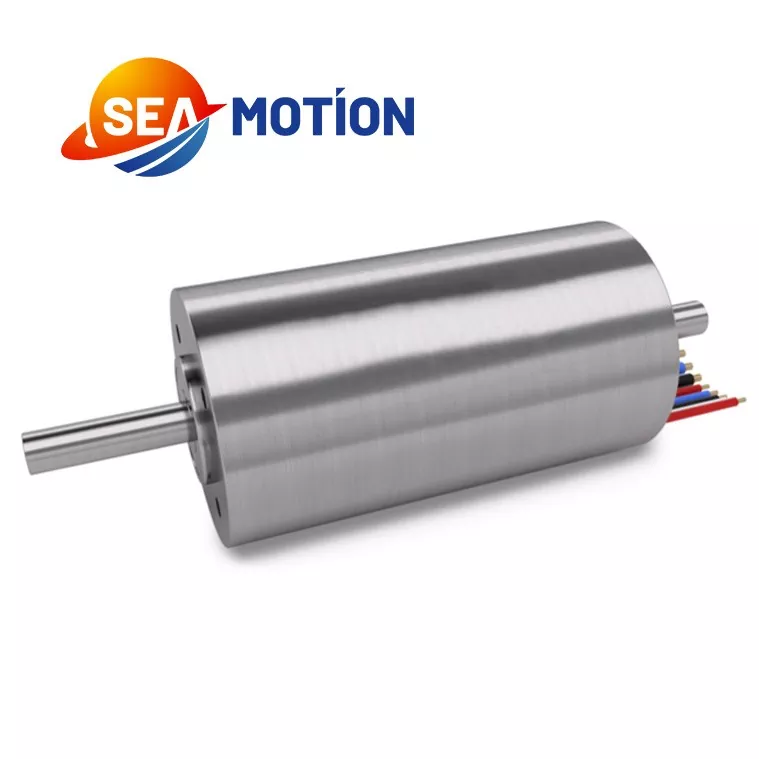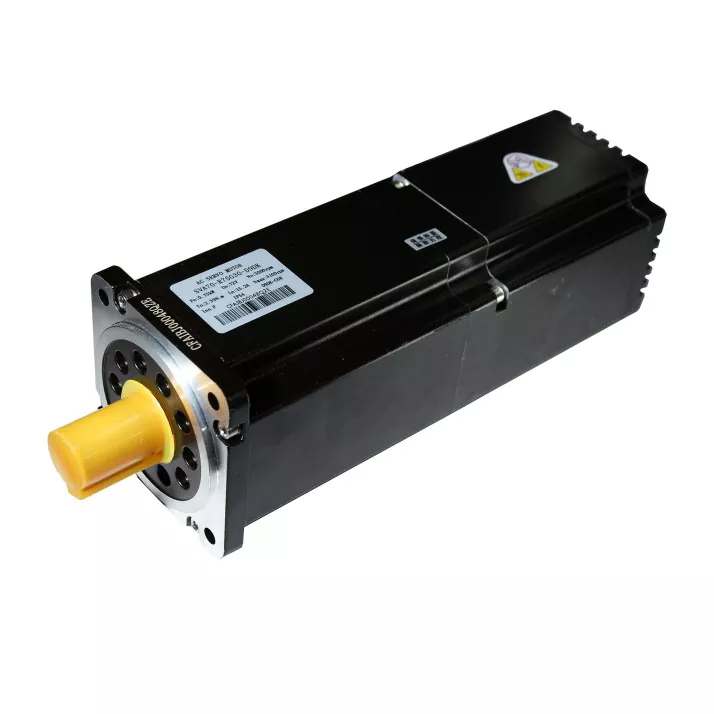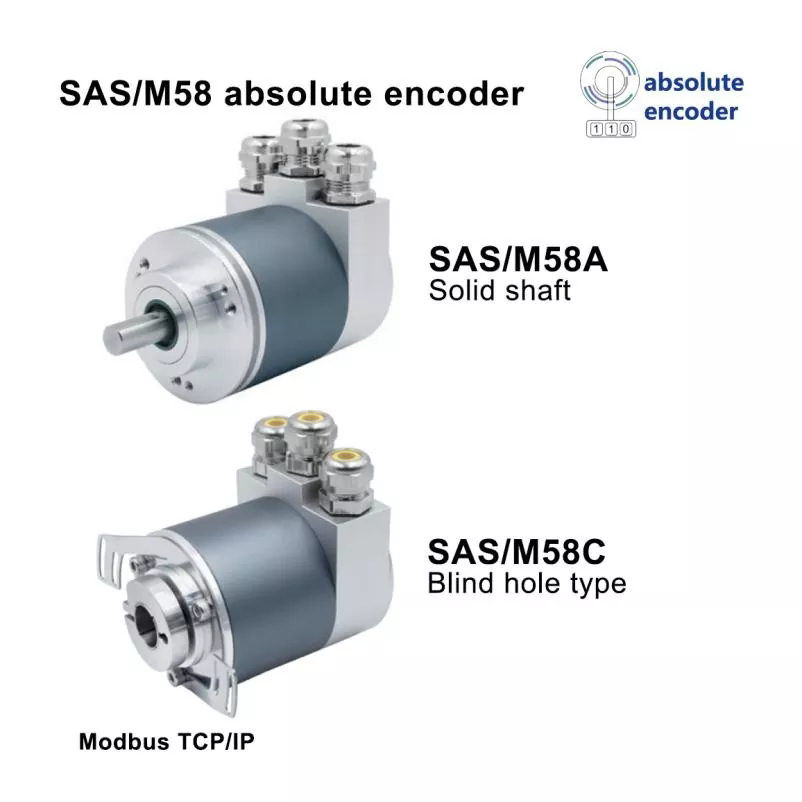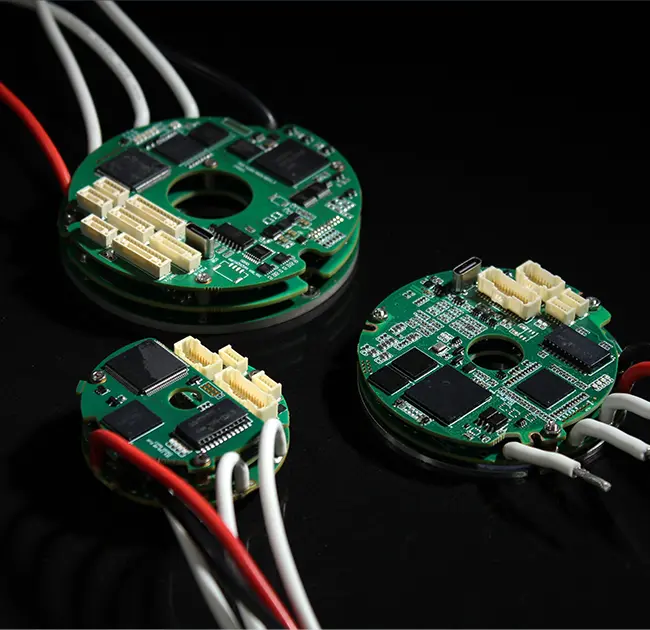

Jingyue provides advanced Frameless Torque Motors for engineers and equipment manufacturers seeking compact, high-torque, direct-drive motion solutions. By separating the rotor and stator from conventional motor housings, this architecture enables more flexible mechanical integration, high dynamic response, and precise rotary motion for robotics, semiconductor equipment, medical systems, CNC machinery, and other demanding applications.
Frameless Torque Motors are designed to place the motor directly inside the mechanical structure rather than relying on a conventional housed motor, gearbox, coupling, or belt transmission. This direct-drive architecture can reduce mechanical transmission losses while providing high torque density, low rotor inertia, high stiffness, and responsive motion control. For modern automation equipment, the ability to customize winding patterns, magnetic circuits, dimensions, and wiring configurations makes frameless motors particularly valuable when installation space, positioning performance, and mechanical integration are critical.
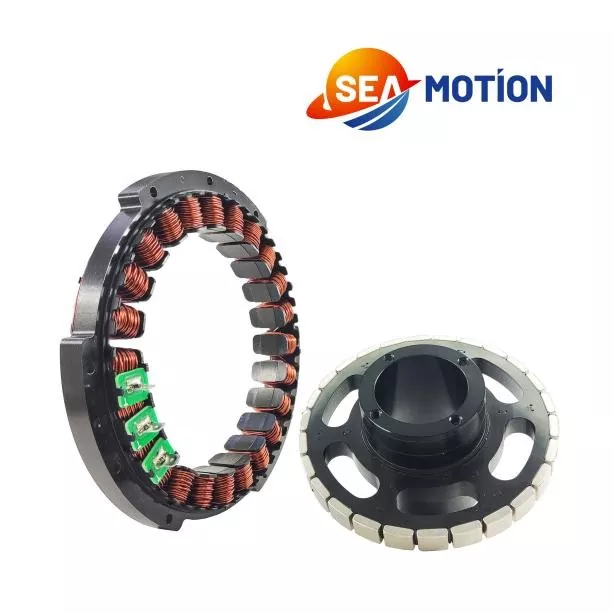
1. What Are Frameless Torque Motors?
2. Why Are Frameless Torque Motors Important?
3. What Are the Main Advantages?
4. How Should You Evaluate Motor Specifications?
5. Where Are Frameless Torque Motors Used?
6. How Can Engineers Select the Right Motor?
7. What Should Be Considered During Integration?
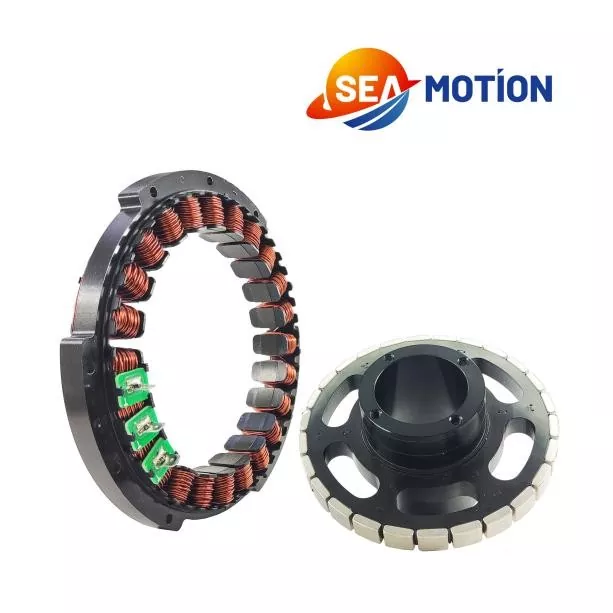
A frameless torque motor is a direct-drive permanent magnet synchronous motor supplied primarily as separate rotor and stator assemblies rather than as a complete housed motor. The components can be integrated directly into the customer's mechanical structure, allowing the machine designer to determine the housing, bearings, shaft arrangement, encoder position, and other mechanical elements according to the application.
Unlike a traditional servo motor that often requires a gearbox, coupling, or belt to transfer torque to the load, a frameless design places the electromagnetic torque source directly at the point of rotation. This can simplify the mechanical transmission path and eliminate backlash associated with conventional gear-driven systems.
The design is especially useful when equipment requires a compact structure, high torque-to-volume ratio, rapid acceleration and deceleration, or precise rotary positioning. Depending on the model and winding configuration, available products can cover different voltage, speed, torque, current, and power requirements.
As industrial equipment becomes smaller and more intelligent, conventional motor arrangements can create mechanical limitations. A complete servo motor requires installation space for its housing and may also require additional transmission components. These components increase the number of mechanical interfaces between the motor and load.
Frameless Torque Motors provide another approach. The rotor and stator can be embedded into the machine structure, allowing engineers to build the motor around the application rather than redesigning the application around a standard motor body.
High torque density is one of the major reasons engineers consider frameless motor technology. By removing unnecessary housing and transmission components, the motor can be integrated closer to the load. This is particularly valuable in robotic joints, rotary tables, semiconductor stages, and other applications where available installation volume is limited.
Traditional gear-based transmission systems can introduce backlash, compliance, and mechanical errors. A direct-drive motor eliminates the need for many of these transmission components. When combined with a suitable high-resolution feedback device and servo controller, the resulting system can provide highly responsive positioning performance.
Low rotor inertia allows the motor to change speed quickly. This characteristic is valuable for equipment performing frequent start-stop cycles, rapid positioning, or repeated direction changes. In precision automation, faster response can contribute to shorter cycle times while maintaining controlled motion.
Because the rotor and stator are separate components, designers have greater freedom to determine how the motor fits into the machine. Hollow structures can also be considered when cables, pneumatic lines, optical paths, or other components need to pass through the rotating assembly.
Different applications require different motor characteristics. A professional supplier can support variations in winding patterns, magnetic circuit design, packaging methods, wiring arrangements, and physical dimensions. This makes frameless technology suitable for both standard equipment and specialized OEM projects.
Choosing a motor only by its rated torque is not enough. Engineers should evaluate the complete operating point, including voltage, speed, continuous torque, peak torque, current, thermal conditions, rotor inertia, and control requirements.
| Specification | Why It Matters | Typical Engineering Consideration |
|---|---|---|
| Rated Voltage | Defines electrical operating requirements | Match the available servo drive and power architecture |
| Rated Speed | Determines continuous operating capability | Consider required operating speed and acceleration profile |
| Rated Torque | Represents continuous torque capability | Include load torque and application safety margin |
| Peak Torque | Supports short-duration high-load conditions | Important for acceleration and dynamic motion |
| Rated Current | Influences drive and thermal requirements | Ensure the controller can continuously supply required current |
| Peak Current | Determines short-term dynamic output | Check drive peak-current capability |
| Winding Parameters | Affect electrical response and control tuning | Match motor parameters with the selected servo system |
For example, available configurations can range from small motors such as the 25LW01, rated at 0.05 N·m, to larger configurations such as the 76ZWS03, which provides a rated torque of 3.3 N·m and a peak torque of 10 N·m. The correct selection depends on the complete motion profile rather than motor size alone.
The flexible mechanical structure of a frameless motor makes it suitable for many precision industries. Typical applications include:
For more information about the product architecture and available configurations, engineers can review the Frameless Torque Motors product page.
A systematic selection process helps prevent undersizing, excessive heating, and compatibility problems. Before requesting a motor quotation, engineers should define the following parameters:
Sharing these details with a technical supplier allows the motor configuration to be evaluated according to the real load profile instead of relying only on a nominal motor rating.
Frameless motors offer mechanical freedom, but successful integration requires careful engineering. The rotor and stator must be installed with appropriate concentricity, air-gap control, mechanical rigidity, and thermal management.
Electrical assembly is equally important. The stator winding must be correctly connected to the drive, while the feedback system must be accurately aligned with the motor's mechanical position. For high-speed applications, rotor structural strength and magnet retention also require careful consideration.
Manufacturing processes can include precision rotor machining, magnet bonding, automated or specialized winding, winding organization, soldering, vacuum potting, adhesive curing, surface cleaning, and electrical performance testing. These steps directly influence motor consistency and long-term reliability.
For OEM projects, customization can also extend beyond dimensions. Winding patterns, magnetic circuit design, wiring methods, and packaging approaches can be adapted according to equipment requirements.
A conventional servo motor normally integrates its housing, shaft, bearings, and other mechanical elements into a complete motor assembly. A frameless torque motor primarily provides the rotor and stator, allowing the customer to integrate these components directly into the machine. This can create a more compact direct-drive structure.
Yes. Depending on the supplier and application, customization can include motor dimensions, winding patterns, magnetic circuit design, wiring methods, and packaging. Customized solutions are particularly useful for robotics, precision stages, medical equipment, and specialized OEM machinery.
The motor itself can be supplied without an integrated feedback device, but precision servo applications commonly require an encoder or another feedback solution. The feedback device allows the controller to monitor rotor position and regulate the motor according to the application's positioning and speed requirements.
Yes. Their compact structure, direct-drive capability, high torque density, and flexible mechanical integration make them well suited to robotic joints. Engineers can combine the motor with suitable bearings, encoders, controllers, and structural components to create a customized joint architecture.
Provide the required torque, speed, voltage, acceleration profile, installation dimensions, duty cycle, environmental conditions, feedback requirements, and expected quantity. These details help the supplier recommend a suitable motor configuration and identify potential thermal or mechanical constraints early.
Frameless Torque Motors offer a powerful combination of direct-drive performance, compact integration, high torque density, low mechanical backlash, and dynamic response. For robotics, semiconductor equipment, CNC systems, medical devices, and other precision machinery, they provide engineers with greater freedom to optimize the complete motion architecture. If you are developing a new machine or upgrading an existing rotary axis, contact us to discuss your torque, speed, dimensional, voltage, and customization requirements and find a motion solution matched to your application.