
When industrial equipment operates under vibration, dust, moisture, oil contamination, and repeated mechanical loads, reliable position feedback becomes essential. Jingyue provides the IO Heavy Duty Encoder as a robust absolute position sensing solution designed for demanding industrial environments, combining high protection, flexible installation, stable signal output, and dependable measurement performance.
Article Summary: This guide explains how an IO Heavy Duty Encoder works, which technical characteristics matter when selecting one, and why rugged absolute encoders are valuable in steel, petrochemical, mining, lifting, papermaking, and other heavy-duty applications. It also examines key specifications such as resolution, protection rating, shaft configuration, operating temperature, impact resistance, and electrical protection so engineers and purchasing teams can make more informed equipment decisions.
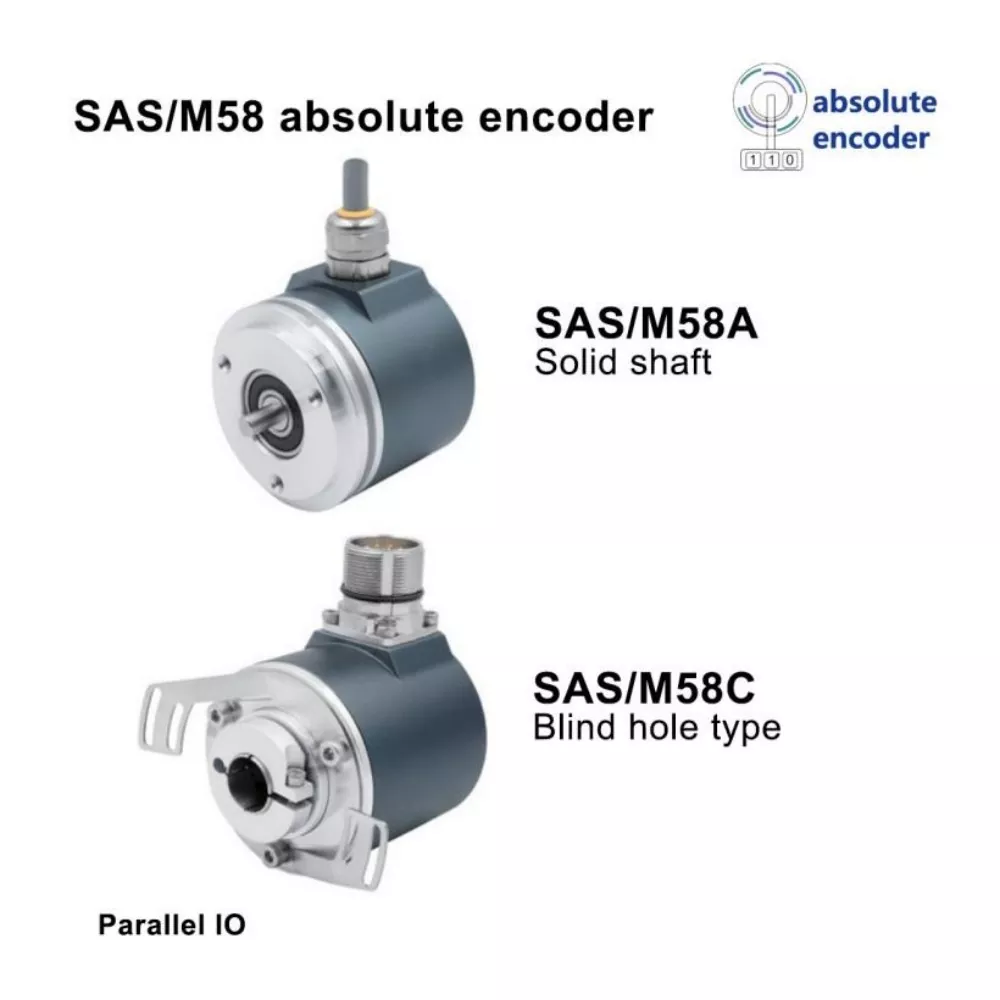
Table of Contents
- What Is an IO Heavy Duty Encoder?
- Why Does Heavy-Duty Construction Matter?
- What Key Features Should Engineers Evaluate?
- What Are the Main Technical Specifications?
- Where Can It Be Used?
- How Should You Select the Right Encoder?
- What Should Be Considered During Installation?
- Frequently Asked Questions
- Conclusion
What Is an IO Heavy Duty Encoder?
An IO Heavy Duty Encoder is an industrial position feedback device designed to measure the rotational position of machinery and transmit that information to a control system. Unlike basic sensing components intended for relatively clean environments, a heavy-duty encoder is engineered to maintain stable operation when exposed to vibration, shock, dust, water, oil, temperature changes, and mechanical stress.
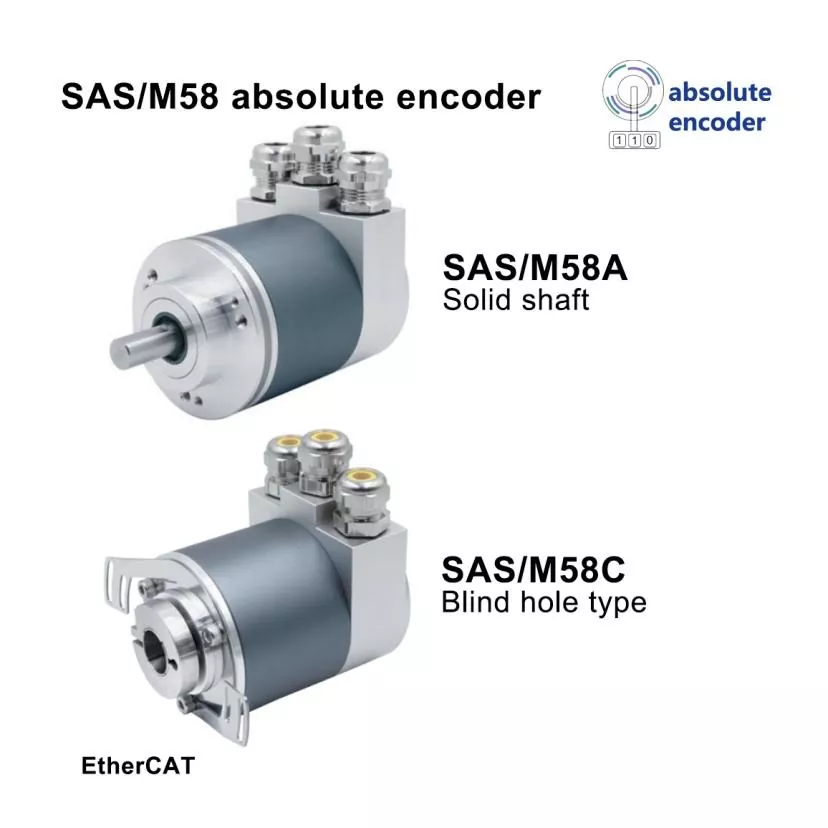
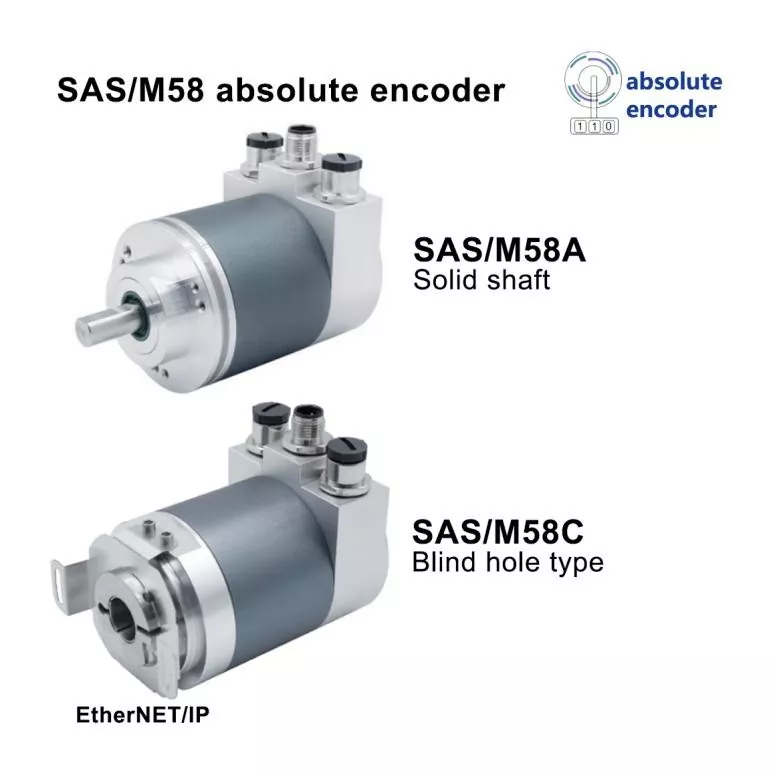
The 58 mm encoder configuration supplied by Jingyue uses high-precision magnetic induction technology and supports both single-turn and multi-turn absolute measurement. Its standard IO signal output simplifies circuit design, wiring, commissioning, and maintenance. This makes the technology particularly useful for industrial systems where straightforward signal transmission and operational stability are more important than unnecessarily complicated communication structures.
Depending on the configuration, the encoder can provide parallel push-pull output with Gray code or binary coding. Resolution options range from 12-bit to 16-bit for single-turn measurement, while multi-turn configurations can support up to 14-bit turn information. More information can be found on the IO Heavy Duty Encoder product page.
Why Does Heavy-Duty Construction Matter?
Industrial position sensors are often installed close to motors, gearboxes, rollers, lifting mechanisms, conveyors, or rotating machinery. These locations can expose electronic components to continuous vibration and mechanical impact. Environmental contamination can create another challenge, especially in steel processing, petrochemical production, mining, and paper manufacturing.
A heavy-duty construction approach addresses these challenges through several complementary design elements:
- Metal housing: Aluminum alloy is used as the standard housing material, with stainless steel available as an option for applications requiring additional environmental resistance.
- High ingress protection: IP65 and IP68 configurations help protect internal components against dust and water exposure.
- Shock resistance: The design supports impact resistance up to 1000 m/s² for 6 ms.
- Vibration resistance: Resistance up to 20g helps the encoder remain stable in mechanically demanding equipment.
- Electrical protection: Reverse-polarity, short-circuit, lightning, and static-electricity protection help reduce risks caused by installation or electrical disturbances.
These characteristics are important because reliable feedback is directly related to the ability of an automation system to monitor movement and make appropriate control decisions.
What Key Features Should Engineers Evaluate?
When comparing industrial encoders, engineers should look beyond resolution alone. A practical selection should consider mechanical compatibility, environmental conditions, electrical interfaces, speed, load, and maintenance requirements.
Absolute Position Measurement
Absolute measurement provides position information without requiring the same type of repeated zero calibration associated with some incremental sensing arrangements. Magnetic measurement technology also allows the encoder to deliver stable position information in industrial environments where optical components may be exposed to contamination.
Flexible Mechanical Configuration
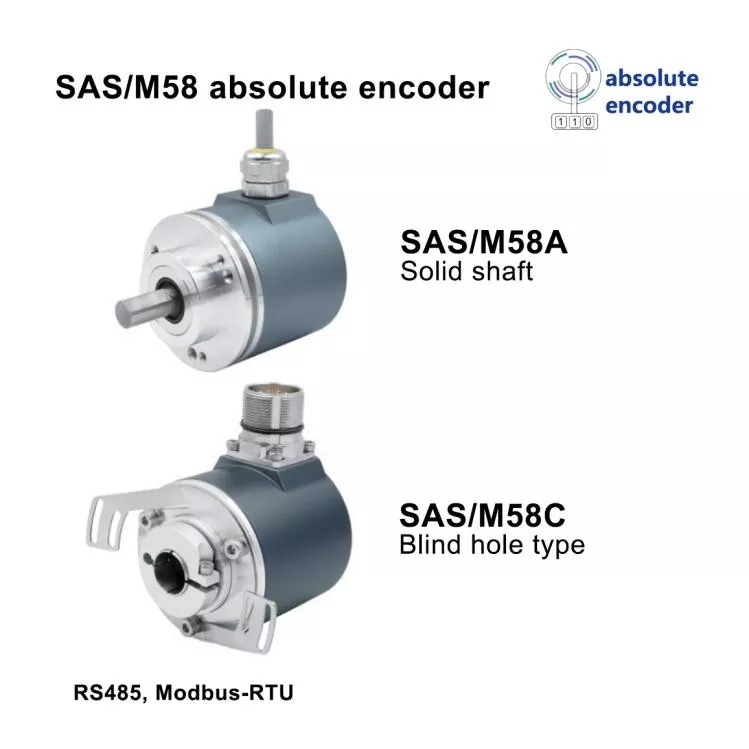
The 58 mm design supports different mounting requirements, including solid-shaft clamping-flange and blind-hole configurations. Shaft sizes from 6 mm to 15 mm can be customized. Radial and axial cable outlet options further improve installation flexibility.
Simple IO Signal Transmission
Standard IO output can simplify connection between the encoder and industrial control equipment. Parallel push-pull output offers a practical approach for applications where fast, direct position feedback is required without introducing unnecessary communication complexity.
High-Speed Operation
With a maximum rotational speed of up to 6000 rpm, the encoder can accommodate many high-speed rotating machine applications while maintaining a compact industrial form factor.
What Are the Main Technical Specifications?
Technical specifications should always be evaluated against the actual machine environment. The following table summarizes key parameters of the 58 mm configuration described by Jingyue.
| Parameter | Specification | Engineering Significance |
|---|---|---|
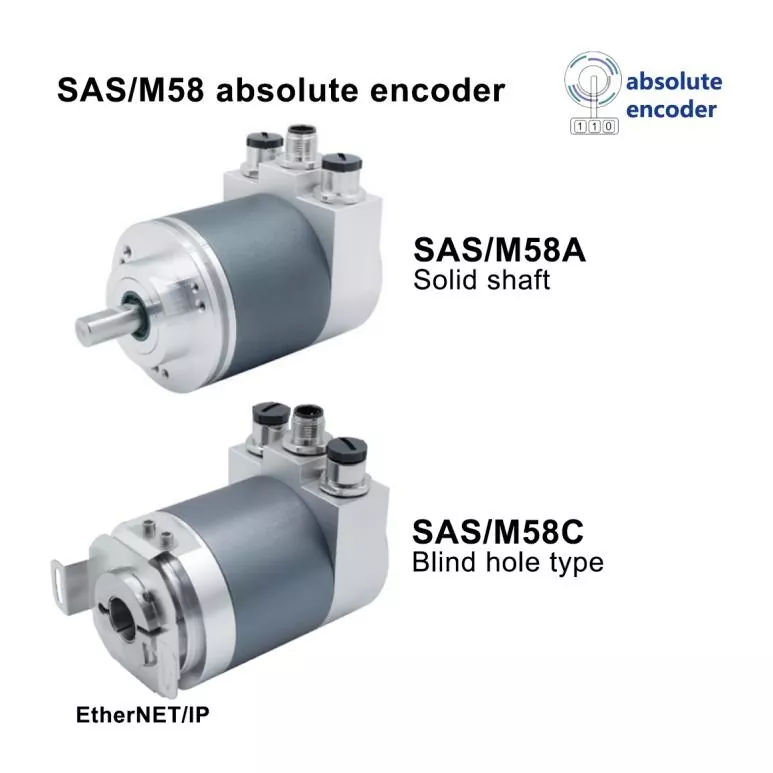
| Model | SAS/M58A / SAS/M58C | Provides configuration options for different mechanical installations |
| Housing | Aluminum; stainless steel optional | Balances mechanical durability with application requirements |
| Power Supply | 10–30 VDC | Compatible with common industrial DC power systems |
| Resolution | 12-bit, 13-bit, 16-bit | Allows position measurement to be matched with control requirements |
| Multi-Turn | Up to 14-bit | Useful for applications requiring multi-revolution position information |
| Maximum Speed | 6000 rpm | Supports high-speed rotating equipment |
| Radial Load | 200 N | Helps accommodate mechanical shaft loading within rated limits |
| Axial Load | 100 N | Provides a reference for installation and shaft-load design |
| Protection | IP65 / IP68 | Suitable for demanding dust and water exposure conditions |
| Operating Temperature | -30°C to +85°C | Supports broad industrial temperature ranges |
| Impact Resistance | 1000 m/s², 6 ms | Helps withstand sudden mechanical impact |
| Vibration Resistance | 20g | Important for machinery with continuous mechanical vibration |
| Connection | Shielded cable, M12, M23 options | Provides flexibility for different control cabinet and field layouts |
Where Can It Be Used?
The combination of rugged construction, absolute position measurement, flexible installation, and direct IO output makes this type of encoder suitable for a wide range of industrial machinery.
- Steel and metallurgy: Position monitoring, roller control, stroke measurement, and equipment feedback.
- Petrochemical facilities: Position detection in demanding environments where dust, oil, and temperature variation may occur.
- Construction machinery: Feedback for rotating mechanisms and moving machine assemblies exposed to vibration and shock.
- Cranes and lifting systems: Lifting stroke monitoring and position feedback for hoisting equipment.
- Mining equipment: Position detection for transportation and mechanical systems operating under harsh conditions.
- Papermaking equipment: Rotational position feedback in environments where moisture, dust, and contamination may be present.
- Power generation: Basic position and operational monitoring of rotating or mechanical equipment.
- Logistics automation: Position and speed measurement for automated handling machinery.
For engineers evaluating alternatives, related technologies such as heavy duty encoders, SSI encoders, PROFINET encoders, and EtherNet/IP encoders can be considered according to the communication architecture of the automation system.
How Should You Select the Right Encoder?
Choosing an encoder should begin with the machine rather than the product name. A structured evaluation helps prevent compatibility problems and unnecessary specification costs.
- Define the measurement requirement. Determine whether the application needs single-turn or multi-turn absolute position information.
- Calculate the required resolution. Select resolution according to positioning accuracy, machine speed, and controller requirements.
- Check the mechanical interface. Confirm shaft diameter, flange type, available installation space, and shaft loading.
- Evaluate environmental conditions. Consider water, dust, oil, vibration, shock, temperature, and potential chemical exposure.
- Confirm electrical compatibility. Check supply voltage, output type, coding method, connector, cable length, and controller interface.
- Review speed requirements. Ensure the maximum encoder speed exceeds the actual machine operating speed with an appropriate engineering margin.
- Consider maintenance. A robust housing and suitable protection rating can reduce environmental-related service requirements.
This approach gives purchasing teams and automation engineers a clearer basis for comparing suppliers and specifying the correct encoder configuration.
What Should Be Considered During Installation?
Even a rugged encoder requires correct mechanical and electrical installation. Shaft alignment should be checked carefully to prevent excessive radial or axial forces. The encoder should also be mounted securely to minimize unnecessary mechanical vibration.
Electrical wiring should follow the specified connection method and supply voltage. Shielded cables can help maintain signal integrity in electrically noisy industrial environments. Protective functions such as reverse-polarity and short-circuit protection provide additional safeguards, but they should not replace proper wiring and commissioning procedures.
Before full production operation, engineers should verify rotation direction, zero or preset settings where applicable, signal output, controller feedback, mechanical clearance, and operating temperature. A controlled commissioning process can identify installation problems before they affect continuous production.
Frequently Asked Questions
What is the main advantage of an IO Heavy Duty Encoder?
Its main practical advantage is the combination of rugged industrial construction with straightforward IO signal output. This makes it suitable for applications requiring stable position feedback, simple wiring, and reliable operation in demanding environments.
Can the encoder provide both single-turn and multi-turn information?
Yes. The referenced 58 mm configuration supports both single-turn and multi-turn absolute measurement, with single-turn resolution options from 12-bit to 16-bit and multi-turn capability up to 14-bit.
What protection rating is available?
The encoder is available with IP65 and IP68 protection configurations. The appropriate rating should be selected according to the actual dust, water, and environmental exposure of the installation location.
Is this encoder suitable for cranes and construction machinery?
Yes. Its shock and vibration resistance, high protection level, and flexible shaft configurations make it suitable for position and stroke feedback in cranes and construction machinery when the application remains within the specified mechanical and environmental limits.
What shaft sizes are available?
The referenced configuration supports customizable shaft sizes of 6 mm, 8 mm, 10 mm, 12 mm, and 15 mm, helping engineers adapt the encoder to different mechanical assemblies.
Conclusion
Reliable position feedback is a fundamental part of industrial automation, particularly when machinery must operate continuously in demanding environments. A rugged encoder combines absolute measurement, durable mechanical construction, high ingress protection, electrical safeguards, flexible mounting options, and practical signal transmission to address these challenges.
For steel processing, petrochemical equipment, mining machinery, cranes, papermaking systems, logistics equipment, and other heavy industrial applications, selecting the encoder according to actual speed, load, environmental conditions, resolution, and controller requirements can help create a more dependable motion-control system. If you are evaluating an encoder for a new machine or looking for a suitable replacement, explore the detailed encoder specifications and contact us to discuss your application, mechanical configuration, signal requirements, and customized industrial encoder solution.